
The Library's Strategic Plan defines our vision, mission, and values. It outlines the Library's goals and objectives as well as the specific actions that are planned to achieve them. One question you might have is, how does the Library pay for all of this, and how do we know the Library did what it said it was going to do?
There are four documents published on our website throughout the year that lay out the Library's goals and report back to the community about both the cost and impact of the services we provide.
- Strategic Plan
- Annual Budget Proposal
- Annual End-of-Year Financial Report
- Annual Outcomes Report
These documents help us explain the monies that are spent supporting Library services. Instead of simply listing revenues and expenditures, we want to show the real-world impact that not just tax dollars, but also grants and donations, have on the community.
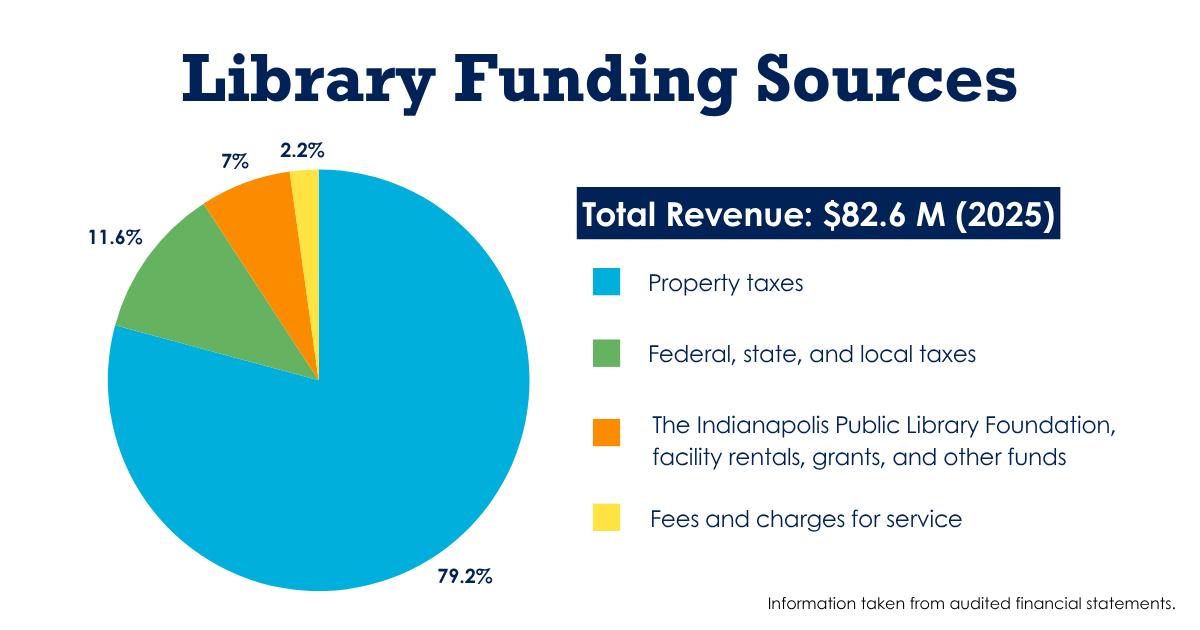
Donations and grants are fairly straight forward concepts, but we often get questions about how both property taxes and bonds are used to support Library services. Here is an at-a-glance look at how Library funding works.
Library Funding
Property Taxes
The largest funding source for the Library's operating budget is local property taxes. The Library's operating budget pays for the day to day operations of the Library, such as staff salaries, supplies, utilities, basic maintenance, and our collection of materials.
Property taxes in Indiana are spent at the local level to fund services within counties, cities, and towns. These local services include public safety (police and fire) public health (water, sewer), roads, streets, schools, libraries, and more. These community service units share the property taxes collected each year. The amount each unit is allowed to collect is based on that unit's maximum levy.
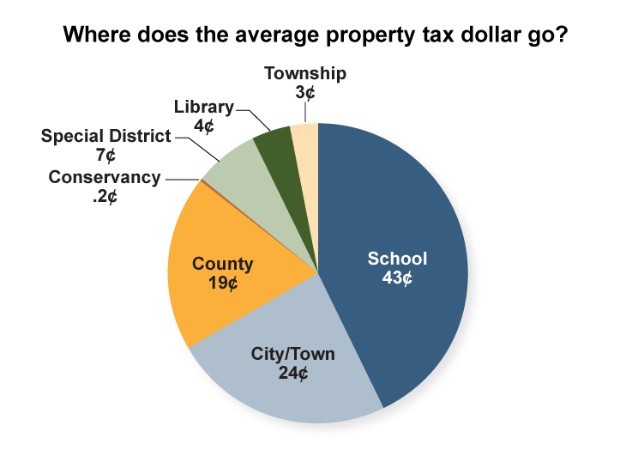
The Library's levy is the portion allocated to spend on Library services. Currently, for every dollar you pay in property taxes, four cents goes to the Library. (Graphic Source Indiana Gateway). For a more detailed look at property taxes in Indiana see the Department of Local Government Finance: Citizens Guide to Property Tax.
Bonds
The Library issues bonds to provide funds for large projects such as new buildings, major maintenance of existing buildings (roof, HVAC), or the purchase of computer equipment. A bond is a loan from investors to a public entity, like a library's governing body. (Note: These monies are SEPARATE from the Operating Budget that is funded by property taxes. Bond monies cannot be used for operating expenditures such as salaries and benefits.)
The Indianapolis Public Library Foundation
The Library Foundation elevates the Library by activating the community’s generosity. While public funding powers the fundamentals (the collection, staff, and capital), the Library Foundation makes the extraordinary possible by funding enriching programs and resources. From annual traditions like the Summer Reading Program, to new or expanded initiatives that meet emerging community needs, funding from the Library Foundation allows community members to participate in programs that promote learning, belonging, and wellbeing at no cost and no barrier to entry. In 2025, the Library Foundation provided over $2 million to support 76 unique Library programs.
Learn more about how you can support the Library through a gift to the Library Foundation!
Facility Rentals
The Library generates additional revenue by renting our rooms/space for meetings and special events, like weddings at Central Library.

"One of my favorite things about Beech Grove Library, besides seeing all the smiles there, is having one of the librarians come up to me with a recommendation they have been holding for me specifically, knowing that I will love it. I always do!"

"I had not been back to Nora Library since they reopened after their renovation. I went finally. All I could say was WOW!! IT IS PERFECT!! Kudos to everyone who designed and made possible our very nice “new” Nora Library."

"I’ve enjoyed four-string concerts with past and present members of the Indianapolis Symphony Orchestra. Plus many educational workshops, historical lectures, and author talks. Every time I visit in person or online, I’m reminded how much this library offers—not just resources, but a space where curiosity thrives, creativity is celebrated, and community is built."
Library Funding FAQ
Who pays property taxes?
Property taxes are collected from taxpayers according to the value of the taxpayer's property. Renters don't directly pay property taxes, but landlords do factor property taxes into the cost of rent to cover this expense, so renters contribute to property taxes with every rent payment.
How does the Library plan for expenditures that exceed its proposed annual budget?
The Library maintains a reserve that provides additional funding for projects that exceed the proposed annual budget, such as facilities improvements. These expenditures are approved by the Library’s Board of Trustees.
What is the difference between a tax rate and a tax levy?
The tax rate is the percentage a property taxpayer will pay per one hundred dollars of net assessed value of their property. Currently, in Marion County, this percentage is .04%. For example, if your home is assessed at $200,000, $80 of your property taxes will go to the Library.
The tax levy is the amount that may be collected each year in property tax dollars. The Indianapolis Public Library is legally a Class 1 Public Library. The Library is an independent taxing unit and receives a portion of the total property taxes collected each year. The Library Board of Trustees approves the budget for the operation of the Library and also the levy (up to a pre-set cap) to meet the budget. Final approval of the budget and tax levy is approved by the City-County Council.
How is the Library a good steward of public funds?
The Library is subject to a third-party audit on behalf of the Indiana State Board of Accounts (SBOA). We are required to submit annual financial reports, also reviewed by a third party, and maintain proper accounting practices, ensuring financial accountability to the community.
How does the Library plan for unexpected expenses?
How the Library prepares for future expenses depends on the type of expense. For example, to prepare for future building projects, the Library maintains a fund to assist with planning facilities improvements, as well as a fund to help cover the cost of those facilities improvements. For other more general unexpected expenses, the Library does what you might do in your household budget. We delay the expense we can, until we have saved enough money to pay for them, or, we prioritize paying for one expense over another, and then save money until we can afford the expense that was determined to be secondary.
What is the advantage of issuing bonds for large building projects?
Bonds help the Library fund big, long-term investments that are often too large to be covered by the annual operating budget. For example, the entire cost of a new building or major renovation is spread out over a period of years. The Library repays the principal and interest over time using property tax revenue or other income.